


NATO International Military Staff Office of the Gender Advisor holds fourth regional Deep Dive session
February 6, 2024
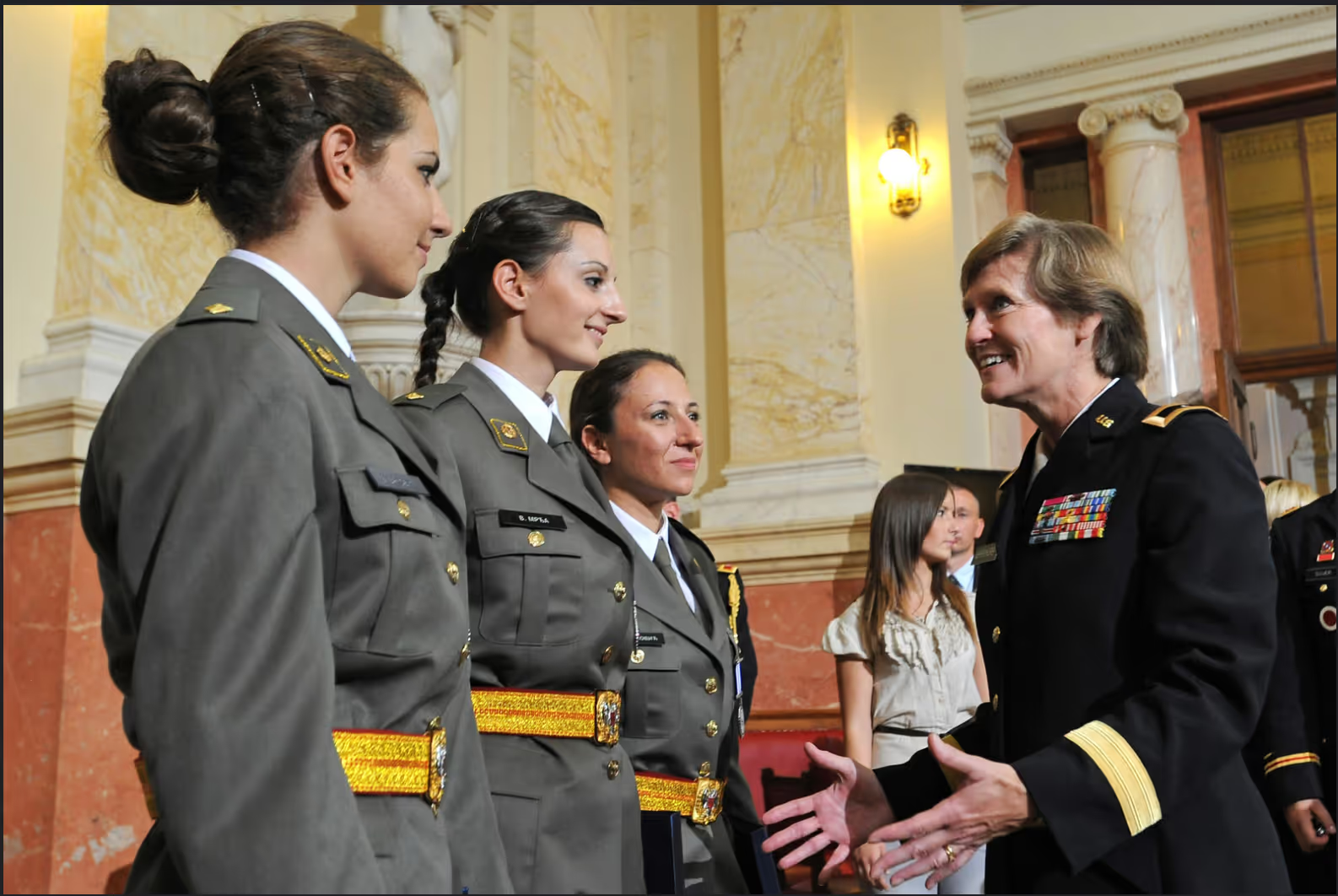
The NATO International Military Staff (IMS) Office of the Gender Advisor's fourth regional Deep Dive session was held on the 17 January 2024. The session focused on the Balkans' progress implementing the Women, Peace and Security (WPS) agenda, alongside related challenges. The session also highlighted the significant advancements in regional WPS cooperation and the NATO Kosovo Force (NATO KFOR) mission's efforts to advance the gender perspective.
Drawing on a variety of quantitative sources, Associate Professor Aleksandar Grizhev of the Military Academy in Skopje outlined the progress towards gender equality in the Western Balkans. For example, Albania, Bosnia and Herzegovina, Kosovo, Montenegro and North Macedonia all have active National Action Plans (NAPs) on WPS. Consequently, the representation of women in the defence system has improved significantly: as of 2023, women made up 14.98% of the Albanian Armed Forces, 10.77% of the Armed Forces of Montenegro, 10.66% of the Army of North Macedonia, 10.59% of the Serbian Army, and 8.2% of the Armed Forces of Bosnia and Herzegovina. As pointed out by Captain Tanja Katnić, Gender Advisor to the Chief of Defence of the Montenegrin Armed Forces, the Western Balkans continue to pursue further progress, with the Ministries of Defence of Bosnia and Herzegovina, Montenegro, North Macedonia and Serbia signing a Joint Ministerial Declaration in December 2021, pledging their commitment to gender-responsive security in the region.
Grizhev went on to discuss regional cooperation initiatives on WPS, such as the joint EU, Regional Cooperation Council and United Nations Development Project programme “Strengthening of Regional Cooperation on Gender Mainstreaming in Security Sector Reform in the Western Balkans” with Bosnia and Herzegovina, Montenegro, North Macedonia, and Serbia. Over the last ten years, this project has aimed to combat gender-based discrimination, enhance gender-responsive leadership, and strengthen mechanisms for gender equality, such as introducing focal points within the Ministries of Defence and Armed Forces. Grizhev cited the project’s results and outcomes, which include regional networking and cooperation on WPS, as well as increased security in the Western Balkans through confidence building and the sharing of knowledge, information and best practices.
Similarly, Dr Elisabeth Schleicher, the Staff Officer Gender Advisor for KFOR, highlighted that the Gender Perspective is vital to the KFOR mission, and “provides a safe and secure environment." She clarified that this includes not just women, men, boys, and girls, but also different age or ethnic groups, given a comprehensive approach based on the Gender Perspective provides access to new and more information, resulting in better-informed planning and decision-making processes.
This is not to say that there are not any challenges when it comes to forwarding the WPS agenda in the Balkans. Grizhev explained that political tensions and the legacy of conflict continue to impede regional cooperation, and he argued that overcoming stereotypes is critical to raising awareness of WPS. Dr Adelina Hasani of the Kosovar Centre for Security Studies echoed the challenges associated with the legacy left by the Yugoslav Wars, explaining how the breakup of Yugoslavia and subsequent conflicts have had a significant influence on the contemporary situation of women and girls in the Balkans. The war resulted in widespread human rights violations, as well as the weaponisation of violence and conflict-related sexual violence (CRSV) against women. Hasani stressed that the rise of gender-based violence is an unfortunate manifestation of these wartime dynamics in the post-war period. Further challenges include the difficulty monitoring challenges and progress due to the lack of comprehensive data on gender-specific issues, as well as limited capacity-building initiatives largely due to insufficient funding.
As a result, Hasani pointed out that, although the number of women working in the security sector has increased, their research focusing on the Kosovo Police and Security Forces found that they do not assume leadership positions. She highlighted that the security sector is still widely seen as male-dominated, contributing to women's reluctance in reporting instances of bullying, harassment, and discrimination, demonstrating how patriarchal norms continue to shape their behaviour. Consequently, Dr Hasani stressed that while women’s increased participation in public and social life should remain a priority, it is also important to increase their responsibility in the security sector through managerial and decision-making roles.
SecurityWomen hopes that with increased training, gender research, the adoption of NAPs, and increased regional WPS cooperation, women's representation and meaningful participation in the security sector across the globe can be enhanced.
To read the full story, see here
February 6, 2024
NATO International Military Staff Office of the Gender Advisor holds fourth regional Deep Dive session
February 6, 2024
The NATO International Military Staff (IMS) Office of the Gender Advisor's fourth regional Deep Dive session was held on the 17 January 2024. The session focused on the Balkans' progress implementing the Women, Peace and Security (WPS) agenda, alongside related challenges. The session also highlighted the significant advancements in regional WPS cooperation and the NATO Kosovo Force (NATO KFOR) mission's efforts to advance the gender perspective.
Drawing on a variety of quantitative sources, Associate Professor Aleksandar Grizhev of the Military Academy in Skopje outlined the progress towards gender equality in the Western Balkans. For example, Albania, Bosnia and Herzegovina, Kosovo, Montenegro and North Macedonia all have active National Action Plans (NAPs) on WPS. Consequently, the representation of women in the defence system has improved significantly: as of 2023, women made up 14.98% of the Albanian Armed Forces, 10.77% of the Armed Forces of Montenegro, 10.66% of the Army of North Macedonia, 10.59% of the Serbian Army, and 8.2% of the Armed Forces of Bosnia and Herzegovina. As pointed out by Captain Tanja Katnić, Gender Advisor to the Chief of Defence of the Montenegrin Armed Forces, the Western Balkans continue to pursue further progress, with the Ministries of Defence of Bosnia and Herzegovina, Montenegro, North Macedonia and Serbia signing a Joint Ministerial Declaration in December 2021, pledging their commitment to gender-responsive security in the region.
Grizhev went on to discuss regional cooperation initiatives on WPS, such as the joint EU, Regional Cooperation Council and United Nations Development Project programme “Strengthening of Regional Cooperation on Gender Mainstreaming in Security Sector Reform in the Western Balkans” with Bosnia and Herzegovina, Montenegro, North Macedonia, and Serbia. Over the last ten years, this project has aimed to combat gender-based discrimination, enhance gender-responsive leadership, and strengthen mechanisms for gender equality, such as introducing focal points within the Ministries of Defence and Armed Forces. Grizhev cited the project’s results and outcomes, which include regional networking and cooperation on WPS, as well as increased security in the Western Balkans through confidence building and the sharing of knowledge, information and best practices.
Similarly, Dr Elisabeth Schleicher, the Staff Officer Gender Advisor for KFOR, highlighted that the Gender Perspective is vital to the KFOR mission, and “provides a safe and secure environment." She clarified that this includes not just women, men, boys, and girls, but also different age or ethnic groups, given a comprehensive approach based on the Gender Perspective provides access to new and more information, resulting in better-informed planning and decision-making processes.
This is not to say that there are not any challenges when it comes to forwarding the WPS agenda in the Balkans. Grizhev explained that political tensions and the legacy of conflict continue to impede regional cooperation, and he argued that overcoming stereotypes is critical to raising awareness of WPS. Dr Adelina Hasani of the Kosovar Centre for Security Studies echoed the challenges associated with the legacy left by the Yugoslav Wars, explaining how the breakup of Yugoslavia and subsequent conflicts have had a significant influence on the contemporary situation of women and girls in the Balkans. The war resulted in widespread human rights violations, as well as the weaponisation of violence and conflict-related sexual violence (CRSV) against women. Hasani stressed that the rise of gender-based violence is an unfortunate manifestation of these wartime dynamics in the post-war period. Further challenges include the difficulty monitoring challenges and progress due to the lack of comprehensive data on gender-specific issues, as well as limited capacity-building initiatives largely due to insufficient funding.
As a result, Hasani pointed out that, although the number of women working in the security sector has increased, their research focusing on the Kosovo Police and Security Forces found that they do not assume leadership positions. She highlighted that the security sector is still widely seen as male-dominated, contributing to women's reluctance in reporting instances of bullying, harassment, and discrimination, demonstrating how patriarchal norms continue to shape their behaviour. Consequently, Dr Hasani stressed that while women’s increased participation in public and social life should remain a priority, it is also important to increase their responsibility in the security sector through managerial and decision-making roles.
SecurityWomen hopes that with increased training, gender research, the adoption of NAPs, and increased regional WPS cooperation, women's representation and meaningful participation in the security sector across the globe can be enhanced.
To read the full story, see here
